Storm & Flash Flood Cleanup in Escondido, CA
When a winter storm stalls over North County, hillside runoff and overflowing drainage can push muddy water through doors and slabs. The mitigation team treats it as Category 3 and removes what it touched.
(888) 450-9281Get help with storm flooding in Escondido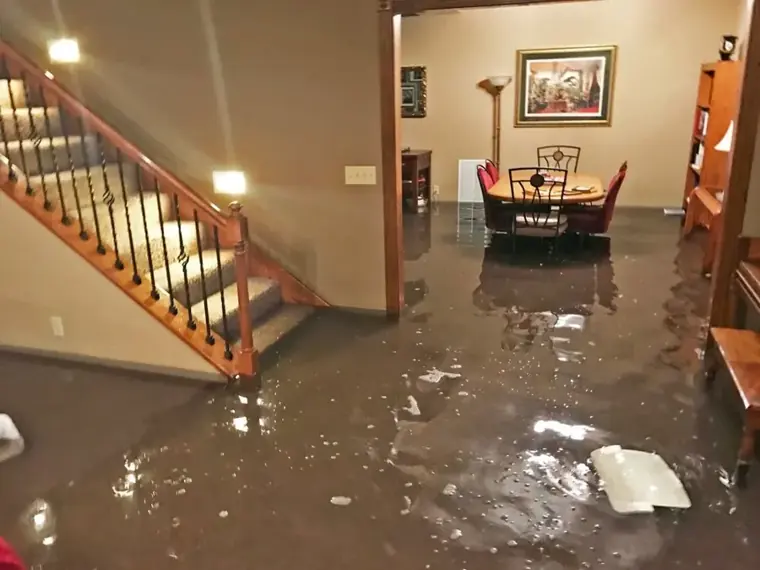
What to do the moment you find storm flooding
- Stay out of moving water
Six inches of fast water can knock a person down; wait until it stops rising.
- Keep power off in wet areas
Do not touch the panel if you are standing in water.
- Photograph the water line
A picture of the high-water mark on walls helps the claim file.
- Avoid contact with the water
Storm runoff carries soil, fuel and sewage; wear boots and gloves if you must enter.
Escondido sits in a valley ringed by decomposed granite hills. Most of the year that means dry creek beds, but a stalled winter storm sends runoff down the slopes, fills Escondido Creek's concrete channel and backs up street drains. Homes near Reidy Creek, the San Pasqual Valley floor, Harmony Grove and the low lots around downtown are the ones that see water at the door.
The standard behind every storm and flash flood cleanup job in Escondido
Rapid local response
The response team answers day or night and sends a crew with pumps, air movers and meters toward Escondido and the nearby North County cities.
IICRC S500 drying standard
IICRC S500 is the industry drying standard. The drying team maps moisture first and pulls equipment only when the readings say dry.
Claim-ready documentation
Most crews log daily moisture readings and take timestamped photos before any demolition, which is what an adjuster reads.
North County water experts
Slab leaks, hard-water pinholes, attic condensate and winter storm runoff are the losses Escondido homes actually have.
What does storm and flash flood cleanup cost in Escondido, CA?
In Escondido, CA, storm and flash flood cleanup typically runs $3,000 to $12,000 or more, because outside floodwater is Category 3 and the porous materials it touches are removed.
- Mud and water removed
- Drywall flood cut
- Antimicrobial
- Flooring and pad removed
- Wall cavities opened
- Structural drying
- Full contents move-out
- Containment
- Extended drying
What moves the number: the depth and spread of the water, the silt load, the flooring and wall materials, and how long the water stood.
For a closer planning range, try the water damage cost calculator. Every range here is typical, not a quote.
Storm and Flash Flood Cleanup in Escondido, step by step
- 1
Walkthrough and moisture map
The tech who does the walkthrough finds the source and maps how far the water traveled, using thermal imaging and pinless meters.
- 2
Extraction
The extraction crew pulls standing water with truck-mounted extraction so it leaves the building instead of moving to the next room.
- 3
Drying set to the room
The drying team sets air movers to each room's evaporation load and runs LGR dehumidifiers, with desiccants for Class 4 materials.
- 4
Daily readings to dry
Most crews record readings daily and pull equipment once wet materials sit within 2 to 4 points of a dry reference.
Why floodwater is handled differently
Water that crossed a yard or a street is Category 3 the moment it enters the house. It carries silt, fuel, lawn chemicals and, often, overflow from sewer lines. The mitigation team works in boots, gloves and respirators, removes the carpet, pad and lower drywall the water touched, and cleans hard surfaces with an EPA-registered antimicrobial.
- Silt and mud: shoveled and extracted first
- Carpet, pad, drywall and insulation below the water line: removed
- Tile, concrete and framing: cleaned, treated and dried
Before the next storm
The National Weather Service San Diego forecast office issues flood watches ahead of big storms, and Ready.gov's flood page covers what to do while water is rising. Clearing gutters and yard drains, moving valuables off garage floors and knowing where the main shutoff is all shorten the cleanup.
Insurance and the claim file
Rising surface water is usually a flood policy question, not a homeowners one; FEMA's flood insurance page explains the difference. The restoration team documents the high-water line, the category of the water, what was removed and the daily drying readings, which is what either type of adjuster reads. Once the structure is dry, see structural drying for how the drying goal is verified.
Storm and Flash Flood Cleanup coverage across Escondido
The restoration team handles storm flooding in every Escondido ZIP and the neighboring North County cities.
The restoration team handles storm flooding across Old Escondido, downtown, Kit Carson, Bear Valley, Rancho San Pasqual, Hidden Meadows and Harmony Grove, plus San Marcos, Valley Center and Rancho Bernardo.
ZIP codes 92025, 92026, 92027, 92029 are all covered, along with the Escondido PO box ZIPs 92030, 92033, 92046.
See every neighborhood and ZIP coveredRelated water damage services in Escondido
Storm and Flash Flood Cleanup: common Escondido questions
Does Escondido really flood?
Most years stay dry, but when an atmospheric river stalls over North County, streets, low yards and homes near creeks and drainage channels can take water quickly. The January 2023 and January 2024 storms flooded streets across San Diego County.
Why is storm water treated as Category 3?
Water that flowed across yards, streets and drainage carries soil, fuel, fertilizer and often sewage. The IICRC S500 treats it as Category 3, so porous materials it touched are removed.
Is flood damage covered by homeowners insurance?
Standard homeowners policies usually exclude rising surface water, which is covered by separate flood insurance. Water that came through a damaged roof during the storm may be treated differently. Coverage depends on your policy, so it is worth checking with your own insurer.
Can carpet or drywall be saved after a flood?
Carpet, pad and drywall touched by Category 3 floodwater are removed. Hard, non-porous surfaces like tile and concrete are cleaned and treated.
What about the mud left behind?
The mitigation team shovels and extracts silt first, because drying equipment cannot dry a floor still covered in mud.
How long does drying take after a flood?
After removal of wet materials, a flooded slab home often dries in three to five days. Deep water, plaster walls and cool weather extend that.
Storm and Flash Flood Cleanup in Escondido? Call before it spreads.
The longer water sits, the further it wicks into slab, drywall, framing and flooring. The Escondido restoration team answers day or night.